What a Gusset Is
In flexible packaging, a bag gusset is a deliberate inward crease or pleat formed in the film wall so the container can expand beyond a flat two-panel envelope. When buyers ask what a gusset on a bag does, the practical answer is volume efficiency: instead of ordering an oversized flat bag that bunches awkwardly at the corners of a rectangular box or Gaylord bin, the tucked panels unfold to form dedicated vertical side walls.
On a blown-film line, side gussets are formed directly in the polyethylene film bubble as collapsing boards and gusseting blades guide both edges inward before winding or bag-making. Because the term 'gusset bag' describes only that folded pleat, procurement drawings should never rely on the word alone to imply heavy-duty puncture resistance, specific resin blends, or specialized seal styles.
- Three-dimensional volume without excess flat width: A non-gusseted flat bag loses usable width and pulls up at the bottom corners when slipped over a boxy item; inward pleats let the bag walls square around vertical edges cleanly.
- Compact flat storage before filling: Because the side pleats tuck inward during extrusion, empty gusseted bags stack flat in cartons and dispense smoothly at packing stations.
- Geometry does not define film chemistry or bottom seal: Specifying a gusset on a plastic bag never tells a converter whether you need LDPE, LLDPE, or HDPE resin, clear or custom-tinted film, or a specific single-wall thickness—always state material and caliper alongside fold dimensions.
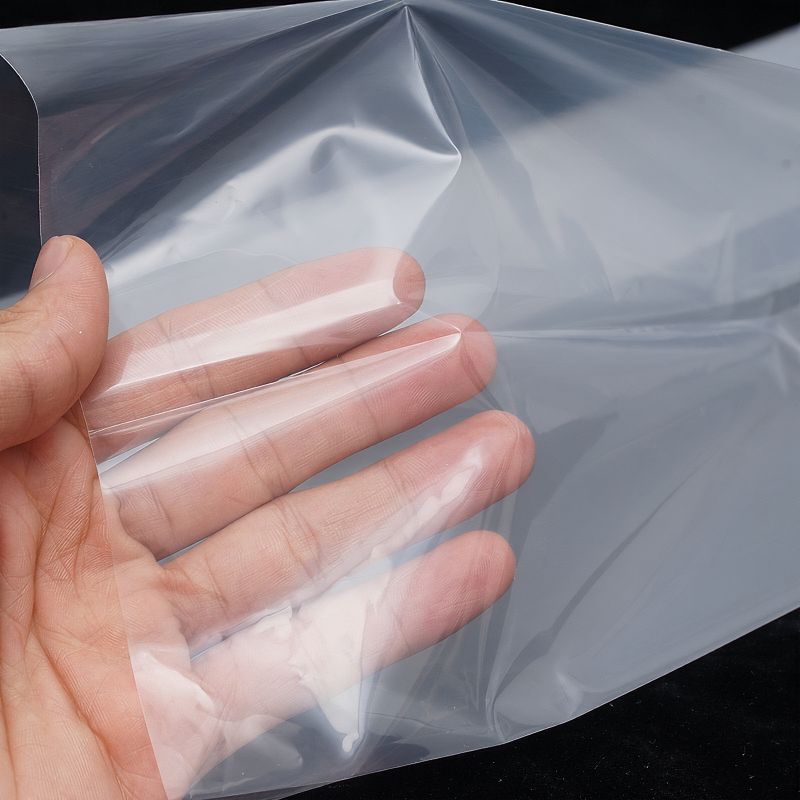
Side Gusset Versus Bottom Gusset
Not every expandable bag folds in the same direction. Industrial shipping liners, retail merchandise bags, and multi-layer stand-up food or consumer pouches place pleats in different locations—and converters run them on entirely different equipment. Before sending an inquiry, confirm whether your drawing shows vertical side pleats or a folded bottom panel.
Zanfeng New Materials manufactures single-web polyethylene Side Gusseted Poly Bags and continuous Gusseted Poly Tubing to confirmed project specifications. Bottom-gusseted bags and multi-layer laminated flat-bottom pouches are included in the comparison below strictly so buyers do not assume these structures are interchangeable on a quote request:
| Structural Feature | Side Gusseted Poly Bags | Bottom Gusseted Bags | Flat-Bottom Stand-Up Pouches |
|---|---|---|---|
| Pleat Location | Inward vertical pleats running full length down both left and right edges. | Single horizontal inward fold running across the bottom base only. | Separate or multi-folded side and base panels joined with vertical and bottom fin/quad seals. |
| Primary Heat Seam | Straight cross-bottom heat weld sealing across four film layers at the pleated sides and two in the center. | Left and right vertical hot-knife side welds cutting across the folded bottom pleat. | Multi-edge perimeter heat seals engineered for stiff multi-layer laminate webs. |
| Footprint When Filled | Expands into a deep rectangular sleeve ideal for cartons, bulky parts, bundled goods, and bin liners. | Base opens moderately while upper mouth stays flat; suited to lighter flatter items. | Forms a rigid box-like retail shelf display footprint. |
| Zanfeng New Materials Supply Scope | Confirmed made-to-order format: Side Gusseted Poly Bags (and Gusseted Poly Tubing). | Structural reference only; share your sample or packed item dimensions to evaluate if a side-gusset layout fits. | Outside single-web polyethylene bag scope; multi-layer laminated barrier pouches are not assumed. |
How to Record Gusset Dimensions
In industrial packaging specifications, side-gusseted poly bags are recorded using the three-number sequence Width × Gusset × Length (W × G × L) followed by single-wall film thickness. Ambiguity most often happens on the middle number—when one buyer measures the visible crease depth on a laid-flat sample while another records the fully opened side wall.
Measure an empty laid-flat bag on a flat table whenever possible, and cross-check clearance against the outer dimensions of the box, bin, or part being packed. For step-by-step sizing allowances across bag styles, see How to Measure Poly Bags.
- Face Width (W): Measure straight across the front flat panel from left outer crease to right outer crease while the bag lies completely flat (see Side Gusseted Poly Bags for converted bag specifications).
- Gusset Depth (G) vs. inward tuck depth: Pull one side pleat fully open and measure the total expanded side panel from front face to back face. If each side tucks inward 3 in. when laid flat, the full expanded gusset depth is G = 6 in. (giving a total open flat width of W + G and an open perimeter of 2W + 2G). Always label on your drawing whether a number represents full expanded gusset depth or single inward fold depth; gusset depth is made to specification per project.
- Bag Length (L): Measure from the top open cut edge down to the bottom heat seal, and note whether your tolerance applies to usable interior length above the weld or overall cut length. Include top closure clearance—at least half of the gusset depth (0.5 × G) plus extra film for tying, taping, or heat sealing over the packed load.
- Single-Wall Film Thickness: Isolate one layer of film away from the four-layer pleated margins and state caliper in mil or microns (µm) rather than clamping across folded pleats.
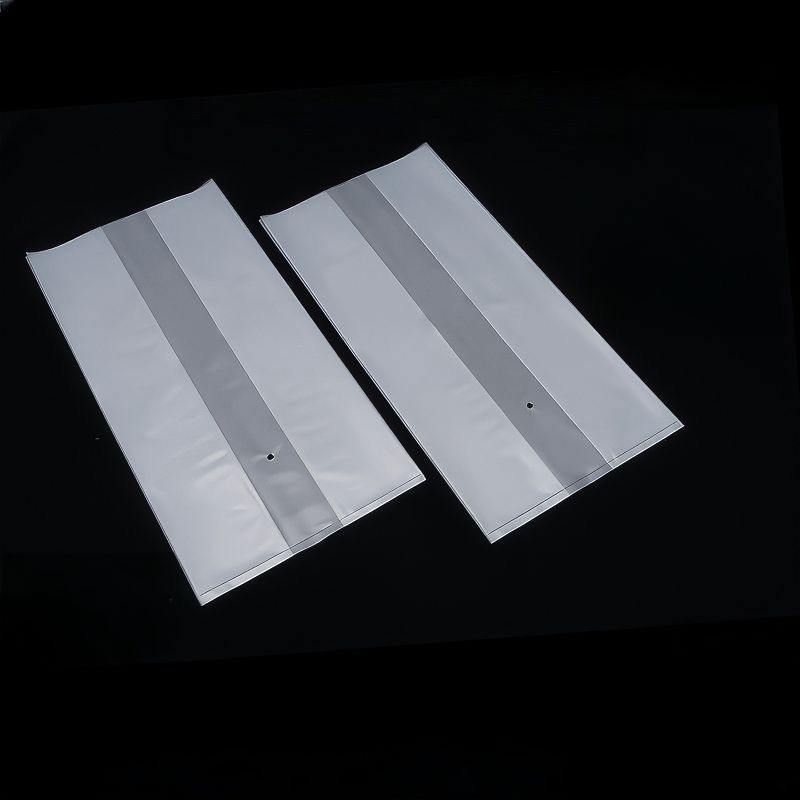
Finished Bags Versus Gusseted Tubing
Once you confirm that side pleats fit your item's rectangular profile, decide whether your packing station needs pre-made individual bags or continuous pleated roll film. Side Gusseted Poly Bags arrive cut to a fixed length with a factory cross-bottom heat seal—ready for immediate manual loading, Gaylord/carton lining, or semi-automatic bagging when product height stays consistent across runs.
When part lengths vary from batch to batch—such as long architectural profiles, bundled lumber or extrusions, or variable-height export crates—stocking multiple bag lengths ties up warehouse space. Gusseted Poly Tubing supplies the same inward-pleated cross-section as a continuous open sleeve wound on a core with no cross seals, allowing operators or inline cutting/sealing equipment to cut exact lengths on demand. Share your target W × G dimensions, single-wall thickness, and estimated order volume via Request a Quote for a construction review.
Side Gusseted Poly Bags
Pre-cut, bottom-sealed polyethylene bags with expandable side pleats, confirmed in 3.5–105 cm face widths and 20–180 µm single-wall thickness.
Gusseted Poly Tubing
Continuous open-ended pleated polyethylene film wound on rolls so packing lines can cut variable sleeve or bag lengths on demand.