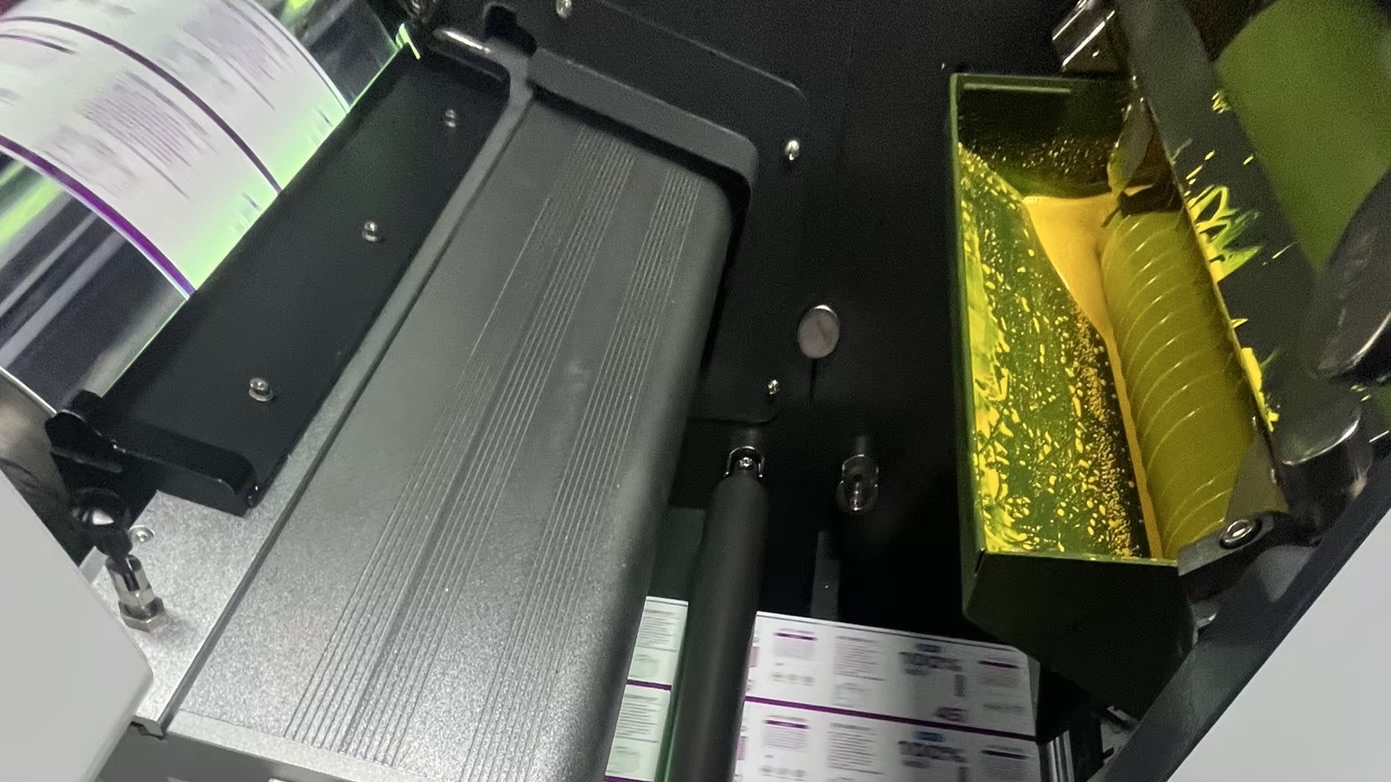
Printed Rollstock Format
When procurement teams specify printed rollstock (also written printed roll stock or custom printed rollstock film), the delivered product is continuous printed Polyethylene Film wound onto cores for automated or semi-automated packaging machinery rather than finished pouches or pre-sealed bags.
Reviewing the film format alongside your machine's forming collar, sealing jaws, and sensor layout prevents costly web-tracking or cutoff errors on the production floor. For a foundational overview of machine-fed webs, read What Is Rollstock Packaging?.
- Wound polyethylene film web: Supplied on cores as flat single-wound web, folded web, or tubular rollstock according to your confirmed equipment path—not delivered as pre-cut individual bags.
- Monolayer / PE packaging scope: Designed for commercial and industrial polyethylene film applications; requests requiring metallized foil laminations, high-barrier retort structures, or specialized regulatory certifications are outside standard utility PE rollstock assumptions.
- Reviewed independently from finished bags: Setup geometry on continuous rollstock differs from post-extrusion bag converting, so finished bag printing requests are always evaluated separately per bag construction and volume.

Web Width and Print Repeat
Unlike manual poly bags where minor length tolerances rarely halt packing, printed rollstock must stay synchronized with forming tubes and cross-seal knives across thousands of cycles per roll. Defining web width, non-print seal lanes, repeat pitch, and eye-mark coordinates upfront ensures clean registration.
| Dieline Parameter | How It Functions on the Film Web | What to Include on Your Drawing |
|---|---|---|
| Total Web Width | Full edge-to-edge width of the unwound polyethylene film web feeding onto your machine's unwind shaft and forming collar. | Exact flat web width in inches (in.) or millimeters (mm), including lap-seal or fin-seal overlap allowances. |
| Live Print Area & Seal Lanes | Graphic zone kept clear of longitudinal back-seal tracks and horizontal cross-seal bands where ink could interfere with heat welds. | Mark ink-free left/right edge margins and top/bottom seal clear zones per your machine builder's dieline template. |
| Print Repeat Length (Pitch) | Exact center-to-center distance along the machine direction from one printed impression to the next, matching one cut package length. | State repeat pitch in mm or inches and note whether continuous/random repeat or eye-mark registered cutoff is used. |
| Photo-Eye Registration Mark | High-contrast rectangular bar printed inside a clear optical track so your machine's photo sensor triggers knife cutoff in register. | Specify eye-mark width × height, contrast color, lane offset from the web edge, and background clearance rules. |
Artwork and Color References
Submitting production-ready artwork allows our team to evaluate print feasibility, print repeat layout, and registration tolerances without assuming unconfirmed press processes. Review Poly Packaging Printing and Artwork Guide before packaging your design files:
- 1:1 editable vector files: Provide vector `.PDF`, `.AI`, or `.EPS` artwork set to exact web width and repeat length, with all typography converted to outlines and any placed graphics embedded at print resolution.
- Spot-color & substrate targets: Specify solid color references (such as Pantone spot numbers) or physical printed film swatches, and state whether the base polyethylene web is clear, white-opaque, or tinted—ink appearance changes noticeably over transparent film without a white backing layer.
- Color count & coverage evaluation: Rather than assuming a fixed press process, station count, or halftone screen capability upfront, send your artwork file so our production team can review line weights, trapping tolerances, and ink coverage feasibility.
- Copy, barcodes & warnings: Verify barcode magnification, quiet zones, orientation (ladder vs. picket fence relative to web travel), and any buyer-supplied suffocation or handling text prior to proof sign-off.
Winding Direction and Equipment Fit
Even accurately printed film will stall a packaging line if graphics unwind upside down, ink faces the wrong side of the forming tube, or the roll exceeds mandrel limits. Because VFFS, HFFS, and overwrap machines route film webs differently, we never assume universal equipment compatibility—always confirm these four mechanical parameters from your machine manual:
- Unwind direction (copy orientation): Indicate whether ink winds on the outside of the roll (wind-out) or inside of the roll (wind-in), and whether graphics unwind top-edge first, bottom-edge first, or sideways—matching standard industry unwind chart positions (#1–#8).
- Roll core inside diameter (ID): Confirm the exact core ID required to lock onto your machine's air shaft or mechanical chucks.
- Maximum roll outside diameter (OD) & weight: State the maximum roll OD your unwind stand clears and the maximum roll weight permitted by your hoist or operator handling rules.
- Single-wall thickness & resin behavior: Specify target single-wall caliper (mil or µm) and LDPE, LLDPE, or HDPE blend requirements so film stiffness, slip over forming shoulders, and heat-sealing window align with your line.
Request a Rollstock Quote
Share your target web width, print repeat length, single-wall thickness, unwind chart direction, core ID, maximum roll OD, and estimated roll or weight quantity by email or WhatsApp below. Attach your dieline PDF, vector artwork preview, or machine web-routing diagram so we can review process suitability before quoting—or use Request a Quote for broader packaging projects.
Send Your Packaging Requirements
For a quotation, email our team or start a WhatsApp conversation. Please include the following details where available:
- Bag or film format and the item you need to pack
- Dimensions, measurement unit, thickness, and estimated order quantity
- Destination country or port and any printing or closure requirements
- Reference photographs, drawings, or specification sheets attached to your email