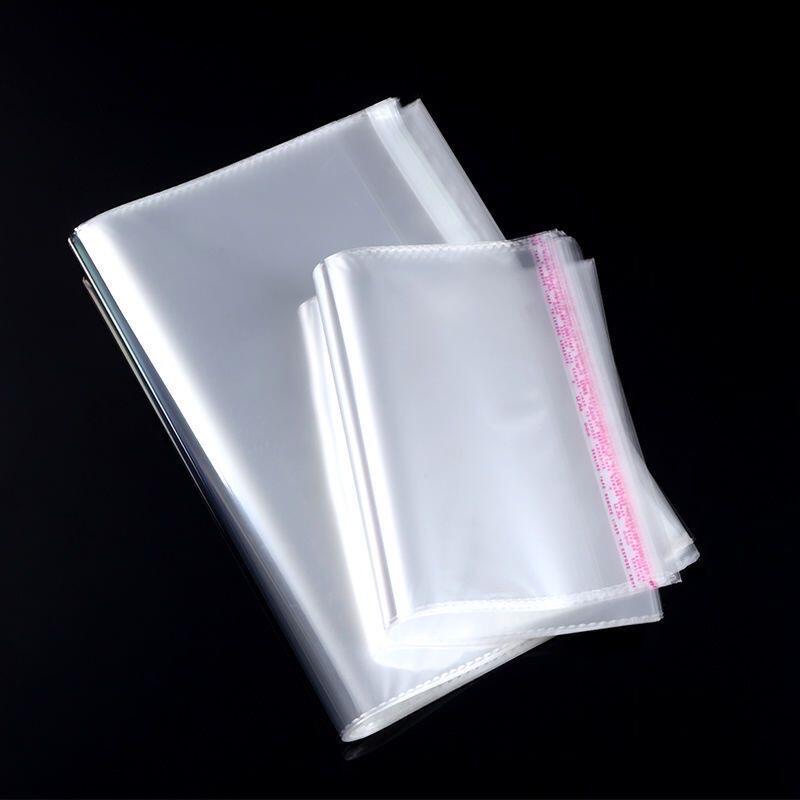
Lip and Tape Closure
On a lip and tape poly bag—also searched by buyers as adhesive flap bags or peel-and-seal poly bags—one wall of the polyethylene bag extends past the open mouth to form a fold-over flap. During bag conversion, a continuous strip of pressure-sensitive adhesive covered by a protective release liner is applied parallel to the opening so operators can close each bag by hand in seconds.
Because several distinct packaging products share similar closure phrasing in search catalogs, confirming the exact bag structure upfront prevents costly mismatches on your packing line:
- Plain non-adhesive extended lip (Poly with Lip): Carries an offset top panel purely to speed up manual bag opening on packing tables, with no adhesive tape or release liner applied.
- OPP / BOPP and cellophane retail display bags: Stiff, high-gloss retail greeting-card or bakery sleeves are typically made from oriented polypropylene rather than flexible polyethylene; see Polyethylene vs. Polypropylene before substituting materials.
- Standalone packing tape and courier mailers: Pressure-sensitive carton-sealing tape rolls and opaque co-extruded shipping envelopes are separate product categories, not clear or tinted polyethylene flap bags.
Bag Body and Flap Measurements
When specifying lip and tape bags, always separate the usable bag body length from the extended flap height. Combining both into a single overall cut length leaves insufficient interior space once the flap folds over the mouth. Review How to Measure Poly Bags for full dimensional conventions.
All lip and tape poly bags at our manufacturing facility are produced to order rather than pulled from fixed stock sizes, so your drawing or inquiry should state each dimension independently:
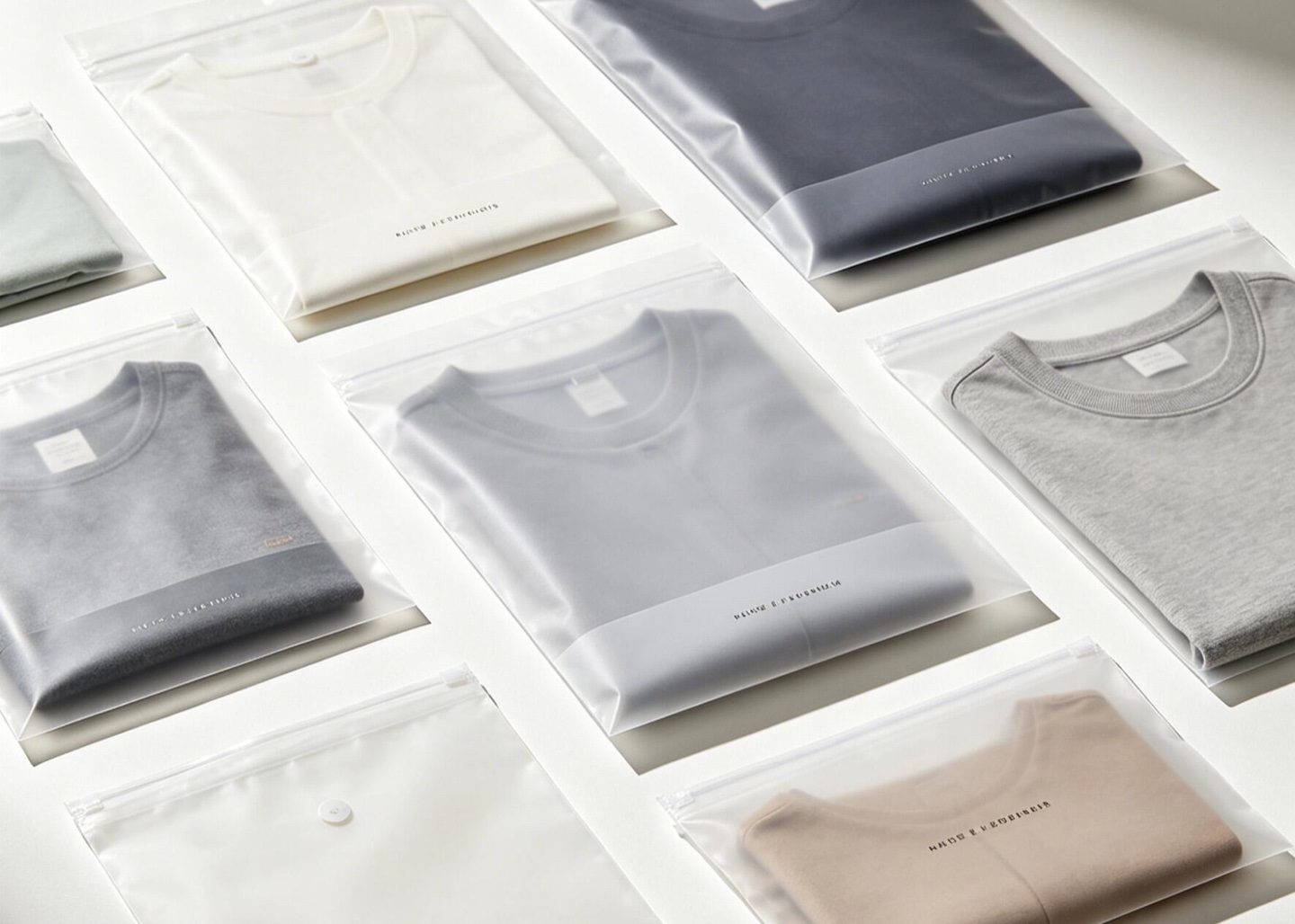
| Dimension / Feature | How It Is Defined and Measured | What to Specify for Review |
|---|---|---|
| Bag Width (W) | Measured flat from the left side seam to the right side seam across the bag face. | Target interior width in inches (in.), millimeters (mm), or centimeters (cm), allowing clearance for item thickness. |
| Usable Body Length (L) | Measured vertically from the bottom fold up to the lower opening edge (excluding the extended lip). | Interior body length needed below the mouth fold, including loft allowance for folded garments or boxed items. |
| Extended Lip / Flap Height | Measured separately from the bag opening edge to the top cut tip of the extended flap panel. | Target flap height so the folded panel clears the product profile and lands flat against the bag face. |
| Air-Relief Venting (Optional) | Folding an adhesive flap seals the mouth quickly and can trap air inside soft-goods packages. | State hole diameter and placement if punched air-relief holes are required; compare Vented Poly Bags. |
Adhesive Position and Closure Type
Two seemingly identical adhesive flap poly bags can behave very differently during loading and unboxing depending on where the glue line sits and how aggressively the adhesive bonds to polyethylene film. Before quotation, we verify three closure details with your team:
- Adhesive placement (on flap vs. on bag body): On standard apparel and fulfillment layouts, the tape strip sits on the inside of the extended flap. Where snag-sensitive knitwear or delicate textiles are slid in and out of the bag, buyers sometimes specify placing the adhesive strip on the outer bag body instead so the exposed glue stays away from the opening path—specify your preferred position on a sketch or sample.
- Closure tack (resealable vs. permanent bond): Repositionable adhesive formulations allow an inspection station or end customer to open and re-press the flap without tearing the polyethylene wall, whereas aggressive permanent-style adhesives are intended to show fiber or film distortion if pulled open. Neither tack behavior is assumed automatically—always state which closure behavior your workflow requires.
- Release liner handling: Let us know how operators peel liners on your packing line so liner width and edge profile can be reviewed against your sample. If your application requires frequent repeated opening over extended storage cycles rather than a fold-over adhesive strip, compare Reclosable Poly Bags and consult our Poly Bag Sealing and Closure Guide.
Material and Thickness
Zanfeng New Materials manufactures lip and tape bags exclusively from blown or cast polyethylene film grades—we do not supply cellophane or oriented polypropylene (OPP) bags on this line. Selecting the appropriate resin blend and single-wall caliper ensures the bag walls resist corner puncture and support clean flap adhesion without stretching or tearing.
| Specification | Material & Construction Scope | Selection Guidance |
|---|---|---|
| Polyethylene Resin Grade | LDPE, LLDPE, or HDPE polyethylene film (reviewed per project; no OPP/cello film). | LDPE and LLDPE offer clarity and soft drape; HDPE provides a crisper, matte-like hand feel. Compare grades in LDPE, HDPE, and LLDPE. |
| Single-Wall Thickness | Custom-extruded to order; specified in mil or microns (µm) across one film wall. | Match single-wall caliper to part weight, sharp edges, and adhesive peel tension; see Poly Bag Thickness, Gauge and Weight Guide. |
| Seam Construction | Typically converted with a folded bottom crease and hot-knife side welds to form the offset lip. | Review seam geometry on Side Weld Poly Bags or send a physical sample bag to match. |
| Film Appearance & Print | Clear polyethylene film; custom bag tint or print artwork reviewed per specification and volume. | Printed suffocation warnings, recycling marks, or brand graphics are never pre-printed stock—submit vector artwork if printing is required. |
Request Closure Specifications
To request pricing and a construction review from our production team, email your required bag width, usable body length (excluding the flap), extended lip height, single-wall thickness, and estimated order quantity by email or WhatsApp below. Please note in your requirements whether the adhesive strip belongs on the flap or bag body and whether resealable or permanent closure tack is needed—or visit Request a Quote and browse all Poly Bags formats. You can also review closure trade-offs in our Poly Bag Sealing and Closure Guide.
Send Your Packaging Requirements
For a quotation, email our team or start a WhatsApp conversation. Please include the following details where available:
- Bag or film format and the item you need to pack
- Dimensions, measurement unit, thickness, and estimated order quantity
- Destination country or port and any printing or closure requirements
- Reference photographs, drawings, or specification sheets attached to your email