Heat Seals and Bag Construction
When buyers ask how to seal poly bags, procurement specs sometimes blur two completely different stages: structural conversion welds made at the bag factory to create the pouch, and closing the open mouth on your packing line after product insertion. Keeping those two classifications separate prevents ordering a side-weld bag where seamless tubular strength was required—or leaving zero headspace for an operator's impulse sealer.
Both primary structural families leave the top mouth open unless an integral closure is added, yet their factory seam geometry behaves very differently under load:
- Bottom Seal Poly Bags (tubular base weld): Cut from seamless blown polyethylene tubing with smooth folded side edges and a single straight cross-bottom heat weld. Because there are no side seams to split outward, bottom-seal construction handles heavier hardware, bulk parts, and carton liners reliably.
- Side Weld Poly Bags (folded base, hot-knife edges): Formed from center-folded polyethylene sheet with a continuous bottom crease and vertical heat welds along the left and right edges. Side-weld construction pairs naturally with extended lips and flat apparel, literature, or retail presentation formats.
- Post-fill impulse or continuous heat sealing: Open-mouth LDPE, LLDPE, and HDPE poly bags can be heat-sealed after filling on benchtop impulse sealers or continuous band sealers. Calibrate dwell time, bar pressure, and cooling pause on actual production film—thicker gauges and gusseted four-layer corners require more thermal energy than thin flat walls, and standard heat seals are not assumed to be liquid-tight unless reviewed for Water Tight containment criteria.
Lip and Tape Closures
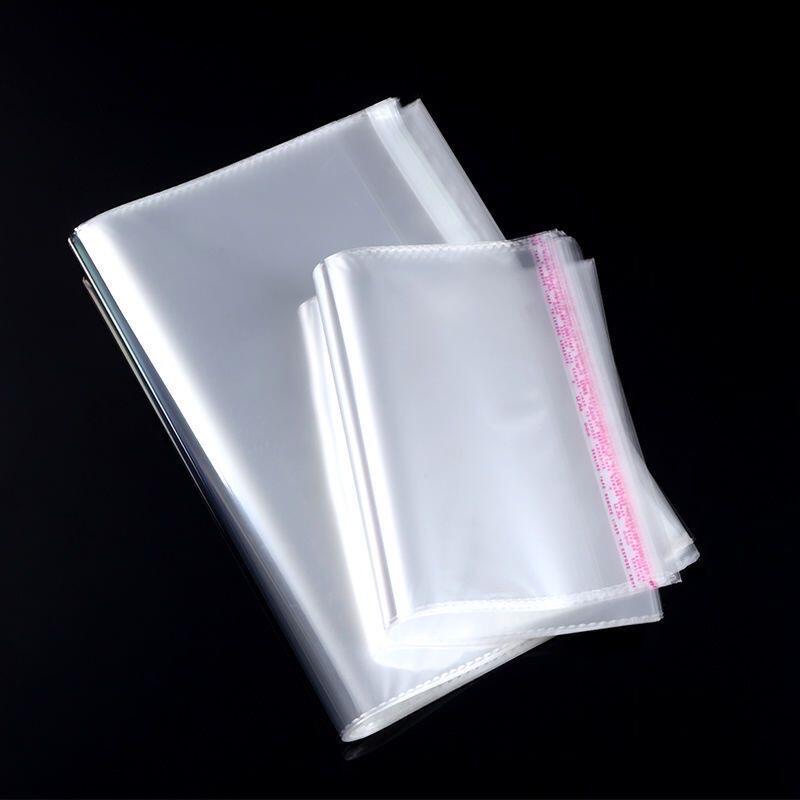
For e-commerce apparel fulfillment, printed catalogs, and high-mix manual packing benches where running electric impulse sealers slows throughput, Lip and Tape Poly Bags build the closure directly into the bag mouth. One film wall extends above the opening as a fold-over flap (the lip) carrying a factory-applied pressure-sensitive adhesive strip protected by a peel-off release liner.
Operators insert the product, strip the paper or film liner, and fold the lip down onto the opposite bag face for a clean, flat closure without heat bars, staples, or twist ties. Clarifying exact terminology on your RFQ avoids three common purchasing mix-ups:
- Integrated flap vs. plain extended lip: Ordering Poly with Lip specifies an un-taped extended mouth panel used to speed manual opening or fixture loading; Lip and Tape Poly Bags add the pre-applied adhesive strip and release liner across that flap.
- Finished adhesive bags vs. standalone tape rolls: In industrial bag converting, 'lip and tape' always describes a converted poly bag with an integral adhesive closure—not separate rolls of carton-sealing tape or bag-neck dispenser tape purchased as loose packing consumables.
- Single-use vs. resealable adhesive behavior: Tell your supplier whether packed items require an aggressive single-close shipping bond or a lighter peel-and-reseal adhesive for inspection and returns so adhesive tack and film caliper can be matched during review.
Press-to-Close Zippers and Sliders
When spare parts, fasteners, kitted hardware, or quality-control samples must be opened and reclosed repeatedly without tearing the film or losing adhesive tack on dusty shop floors, mechanical track closures outperform folded flaps. In search queries such as 'what is resealable plastic bag' or 'slider vs zipper bags,' two distinct track styles appear—and buyers should never assume they are interchangeable in carton packing or supplier tooling.
Zanfeng New Materials supplies press-to-close Reclosable Poly Bags made to project specifications. Molded plastic slider clips are compared below for engineering clarity only—describing slider geometry in this guide does not mean slider-clip bags are offered as a confirmed catalog item:
| Comparison Factor | Press-to-Close Zipper Track | Slider Clip Closure (Reference Only) |
|---|---|---|
| Closing Mechanism | Integral interlocking polyethylene rib-and-groove profile pinched shut by finger pressure from edge to edge. | Separate molded plastic rider clip that cams the upper track open and closed as it slides across the top. |
| Top Mouth Geometry | Includes an upper grip lip above the track so operators can separate and pull open the seal cleanly. | Track sits flush at the top edge with a protruding rigid plastic clip parked at one corner. |
| Carton Packing & Stack Profile | Lays flat in master cartons and parts bins with minimal extra stack thickness. | Rigid slider clip adds localized bulk, resists flat compression, and can catch on adjacent packages. |
| Closure Continuity & Supply Scope | Continuous rib engagement across full interior width; confirmed format on Reclosable Poly Bags. | Leaves a small mechanical clearance gap where the slider parks; not a confirmed Zanfeng New Materials stock or catalog format. |
Closure Dimensions to Confirm
An overall cut-length measurement that works on a plain open-top bag will leave a zippered or taped bag too short to close over the exact same part. Every closure consumes or extends vertical film in a specific zone, so supplier quotes are only comparable when those zones are broken out explicitly (see How to Measure Poly Bags for full measurement diagrams).
Before requesting pricing or production samples, verify these closure-specific dimensions on your specification sheet:
- Open-top bags for post-fill heat sealing: State flat interior width (W), usable length (L) from the open cut mouth to the inside edge of the bottom weld (excluding the bottom skirt on Bottom Seal Poly Bags), and extra top headspace for the impulse weld band plus three-dimensional product thickness.
- Lip-and-tape bags: Record bag width (W), main body length (L below the open mouth) separately from the extended lip height, note adhesive strip position, and state whether single-use or resealable tack is intended.
- Reclosable press-to-close zipper bags: Always specify interior width (W) between side welds and usable interior length measured strictly below the zipper track—never include the upper grip lip above the zipper in your usable storage height.
- Film thickness, loading direction & seam sketch: Include target single-wall thickness in mil or microns (µm), estimated order quantity, whether parts load through the narrow or wide side, and a marked-up sample photo or drawing submitted through Request a Quote.