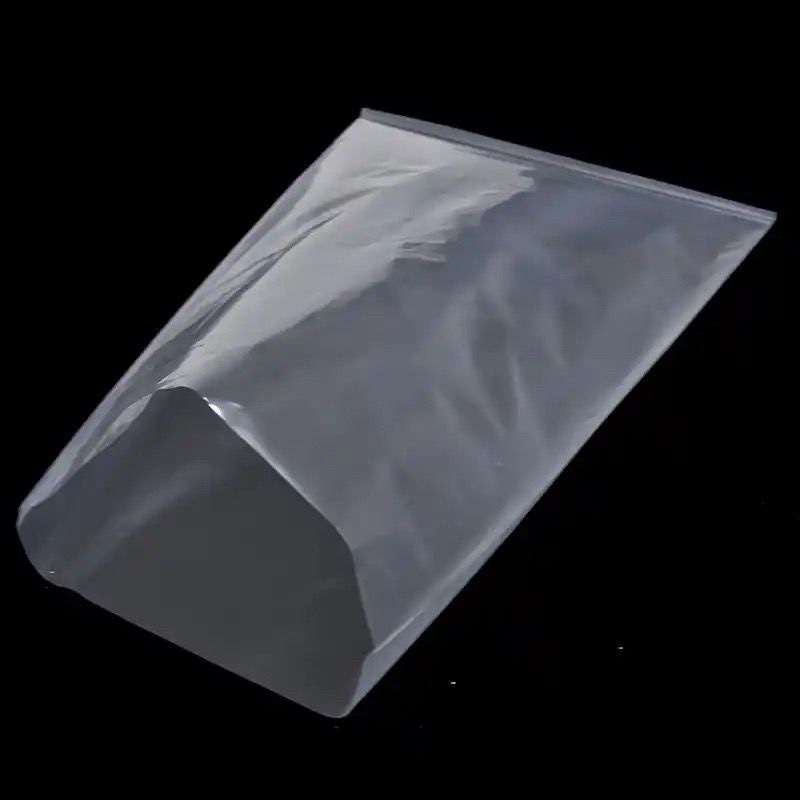
Bottom Seal Construction
During conversion, blown polyethylene film tubing is fed flat through a sealing bar that makes one horizontal weld across the width of the tube and cuts each bag to length. The left and right edges of the bag are smooth, unbroken creases formed in the original blown film bubble rather than hot-knife welds.
Below the horizontal heat weld, a short unsealed tail (known as the bottom skirt) remains outside the sealed cavity to protect weld integrity under load.
- Seamless left and right edges: Eliminates side-seam splitting when cylindrical, granular, or shifting items press outward against the bag walls.
- Single straight cross-bottom weld: Positioned near the bottom cut edge with consistent heat-bar dwell.
- Plain open top: Designed for post-fill impulse heat sealing, twist ties, bag tape, or fold-over carton lining.
Open End and Seal Location
Accurate measurement prevents short-length bags on the packing line. On a bottom seal poly bag, usable interior length runs from the top open cut edge down to the inside edge of the bottom heat weld—not to the outer tip of the bottom skirt.
If your operators close the bag on an impulse sealer after filling, allow extra head space above the product height for the top seal band and product thickness. Review How to Measure Poly Bags for allowance guidelines.
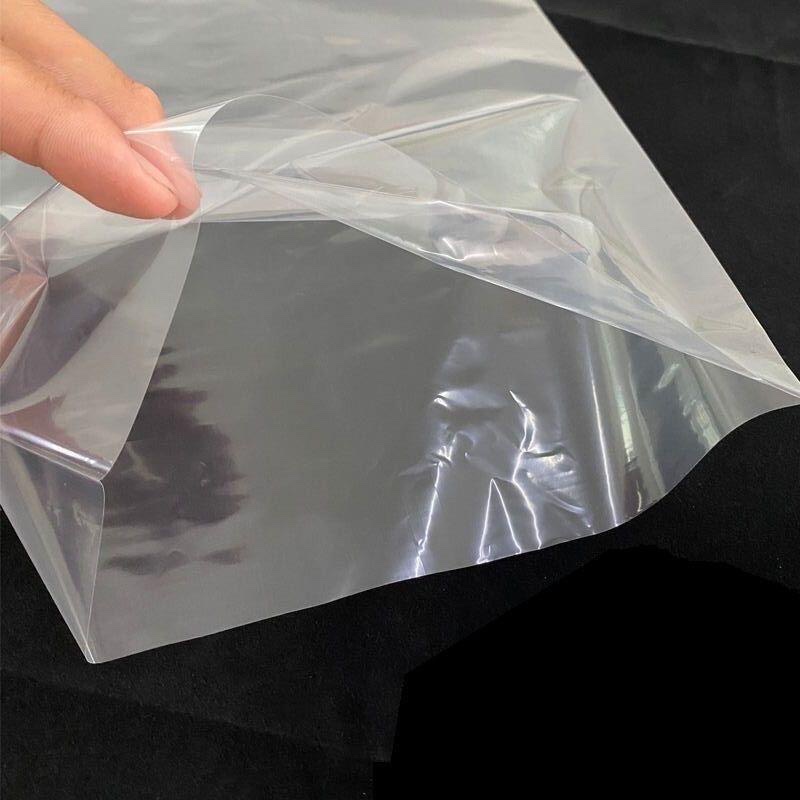
Bag Width, Length and Thickness
Bottom seal poly bags are produced to order at our manufacturing facility. Every combination of resin grade, width, length, and single-wall caliper is verified against your application before quoting.
| Specification | Confirmed Review Range / Options | How to Specify |
|---|---|---|
| Bag Width (W) | 3.5–105 cm (approx. 1.4–41.3 in.) | Measured flat across the seamless folded side creases. |
| Bag Length (L) | 2.5–300 cm (approx. 1.0–118.1 in.) | Specify whether your drawing measures overall cut length or usable length to the bottom weld. |
| Single-Wall Thickness | 20–180 µm (approx. 0.8–7.1 mil) | Measured across one film wall; state mil or microns (µm). |
| Resin & Film Appearance | HDPE, LDPE, or LLDPE; clear or custom bag tint by reference | Material blend and any custom bag color or artwork request are reviewed per size and order volume. |
| Construction Layout | Open top, one straight bottom heat seal, no side welds | If you need expandable pleats for boxed items, see Side Gusseted Poly Bags. |
Bottom Seal Versus Other Constructions
Buyers often describe any non-gusseted bag as a 'flat bag,' yet bottom-seal and Side Weld Poly Bags behave differently under heavy loads and on automated filling equipment. Compare their seam layouts before finalizing your drawing (and see Poly Bag Sealing and Closure Guide):
| Feature | Bottom Seal Poly Bags (This Page) | Side Weld Poly Bags |
|---|---|---|
| Side Edges | Continuous seamless folds from blown film tubing | Hot-knife heat welds along both left and right edges |
| Bottom Edge | Horizontal heat weld + short bottom skirt | Continuous folded sheet crease (no bottom skirt) |
| Typical Load Suitability | Preferred for heavier parts, bulk hardware, and liner loads | Preferred for flat apparel, literature, and clean presentation flaps |
| Extended Lip / Adhesive Flap | Standard flush open top | Commonly paired with extended lips or Lip and Tape closures |
Request a Bag Quote
Send your required width, length, single-wall thickness, and estimated order quantity by email or WhatsApp below, or attach a drawing or sample photo so we can confirm the bottom-seal layout. Special bundling or mounting formats (such as wicketed stacks) are not assumed unless reviewed and confirmed from your sample.
Send Your Packaging Requirements
For a quotation, email our team or start a WhatsApp conversation. Please include the following details where available:
- Bag or film format and the item you need to pack
- Dimensions, measurement unit, thickness, and estimated order quantity
- Destination country or port and any printing or closure requirements
- Reference photographs, drawings, or specification sheets attached to your email