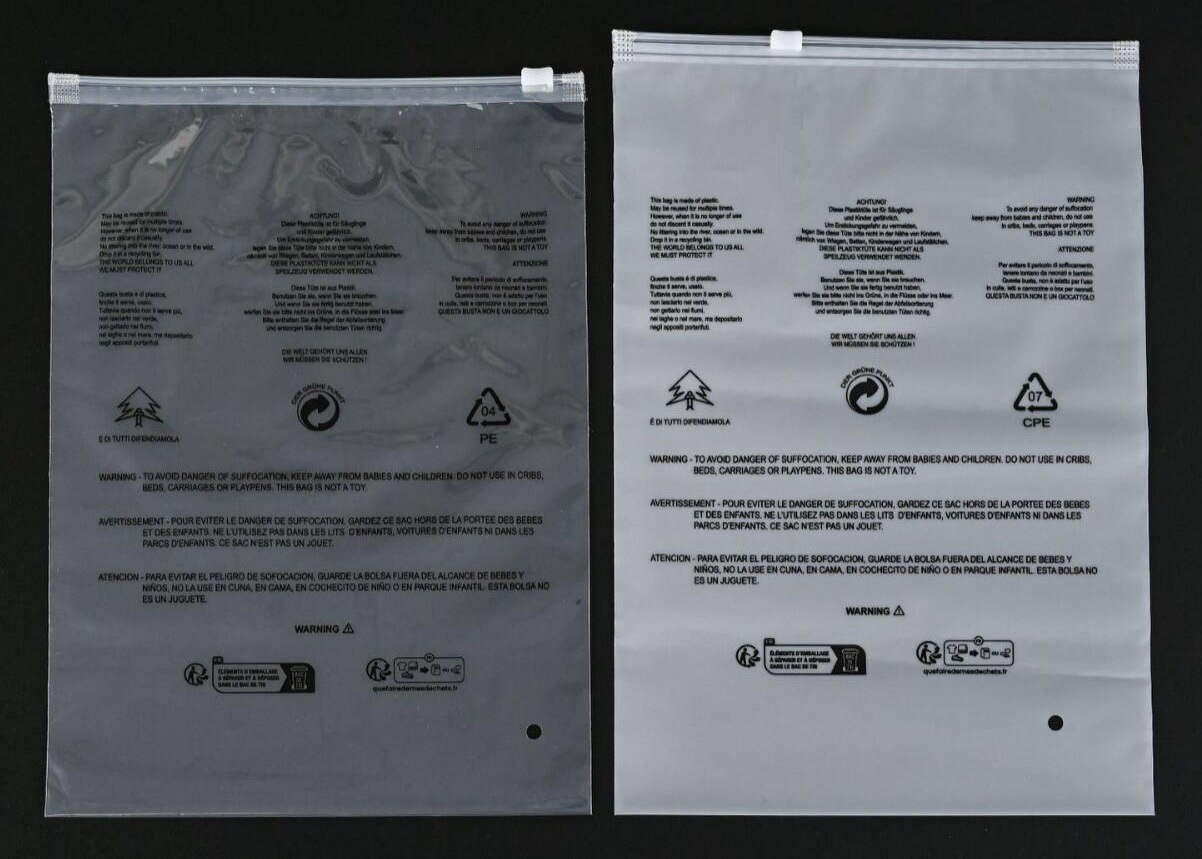
What Perforated Can Mean
Buyers researching what a perforated plastic bag is often find two unrelated product categories sharing the exact same adjective. In general vocabulary, any pierced plastic film is 'perforated'—whereas a non-perforated plastic bag is a continuous-wall pouch (Poly Bags) with zero cutouts or slit lines, used whenever keeping dust out or retaining tiny loose fasteners inside is the top priority.
On a bag-making machine, however, punched air-relief vent holes and slit tear-off perforation lines require completely different punches, blades, and quality inspections. Sending a purchase description that says only 'perforated poly bags' without a sample photo or dimensioned sketch can result in receiving tear-off roll bags that trap air like a balloon on your palletizer—or hole-punched bags that cannot be torn off a dispenser bar:
| Specification Aspect | Punched Ventilation Holes (Vented Poly) | Slit Tear-Off Perforation Lines |
|---|---|---|
| Mechanical Geometry | Clean circular die cutouts (or specified pinhole arrays) punched completely out of the film wall. | Row of intermittent straight knife slits separated by narrow uncut polyethylene 'ties' or nicks. |
| Primary Packaging Role | Evacuates trapped air during bagging/palletizing and lets ambient moisture or condensation escape. | Creates a controlled weak line to tear individual bags off a wound roll or tear open a sealed strip. |
| Structural Behavior Under Load | Bag body stays intact around the packed item when holes are spaced clear of seams and stress folds. | Designed to part under hand tension; placing slit lines across load-bearing walls risks premature splitting. |
| Catalog Alignment | Vented Poly Bags (also available on side-gusseted constructions upon review). | Reviewed by sample/drawing per project; compare also easy-open Linear Tear bags. |
Ventilation Hole Patterns
When compressed stacks of bagged textiles, boxed goods, polymeric parts, or bulk materials trap air cushions inside closed bags, pallets can shift or lean in transit. Vented Poly Bags solve pillowing and trapped-air volume by punching defined openings at repeatable coordinates across the bag face or gusset panels.
Because hole tooling is set up to match your bag width and packed item geometry, specify four physical layout variables rather than requesting generic 'breathable' film:
- Hole diameter: Stated in millimeters or fractions of an inch—large enough for rapid air exhaust under conveyor or pallet compression, yet small enough that packed hardware, molded components, or loose parts cannot protrude or spill out.
- Hole count & single-wall vs. dual-wall punching: Confirm total openings per bag and whether punches pierce both front and back plies together while the bag runs flat (creating symmetric front-and-back vents) or target one panel only.
- Grid spacing & seam clearance: Define horizontal pitch across bag width, vertical distance from the bottom heat seal or top mouth, and safe margins away from side folds or gusset creases so cutouts do not initiate film tears under drop loads.
- Physical air exhaust vs. unverified permeability claims: Punched vent holes provide mechanical air relief and drainage openings; never assume generic 'breathable plastic bag' descriptions carry tested moisture-vapor transmission rates (MVTR), produce shelf-life guarantees, or regulated live/medical transport compliance unless specifically engineered and lab-verified for your application.
Tear-Off Lines Are Different
A tear-off perforation line is engineered for controlled separation, not airflow. During conversion, a toothed perforating rule presses across the polyethylene web to alternate cut segments (slits) and uncut bridges (ties). Increasing slit length makes the film easier to snap apart by hand on a packing station dispenser, while wider uncut ties preserve web tension so heavy items do not break off prematurely on automated equipment.
Keep three structural distinctions in mind before writing 'perforated' or 'easy-tear' on a packaging specification:
- Slits are not reliable air vents: Knife-slit perforations carry no removed cutout area; when flat product surfaces press against the inside of the bag, closed slits can block air escape while simultaneously weakening burst strength under compression.
- Roll-dispensing perforations vs. on-bag tear strips: A perforation between connected bags on a core separates individual bags before or during filling, whereas a perforation below a sealed header tears open the package at the point of use—always label which location your line uses.
- Easy-tear film does not always require punched slits: Inquiries for Linear Tear bags may involve directional polymer tear behavior paired with a clean edge tear notch rather than a row of pierced holes, keeping the bag wall completely unpunched until opened. Submit a physical sample whenever matching an existing easy-open bag.
How to Specify the Intended Feature
A simple front-view rectangle sketch with labeled arrows eliminates guesswork between hole punching and slit perforating before tooling is reviewed. Attach a photo of your current sample—or mark up a one-page drawing—with the checklist below and send it using the contact options on Request a Quote:
- Base bag style, flat dimensions & gauge: Record bottom seal, side weld, or side gusset construction, flat width × usable length, single-wall thickness in mil or microns (µm), and target order volume (refer to How to Measure Poly Bags for base dimension rules).
- For air-relief or drainage holes (Vented Poly Bags): Draw circular hole diameter, total number of holes, 1-wall vs. 2-wall punch-through, horizontal spacing across the face, and distance up from the bottom weld or down from the open top.
- For tear-off or easy-open features: Mark exact tear-line position (between bags on a roll vs. across a bag header), approximate slit/tie lengths if matching a current roll, or specify if an unpierced notch structure (Linear Tear bags) is needed instead.
- Loading & stacking conditions: Note part weight, sharp corners, and pallet compression forces so film caliper and hole-to-edge margins can be checked before quotation.
Vented Poly Bags
Polyethylene bags die-punched with circular air-relief or drainage holes at your specified positions, diameter, and count.
Poly Bags
Browse all 10 converted polyethylene bag formats, including bottom seal, side gusset, reclosable, and linear-tear modules.