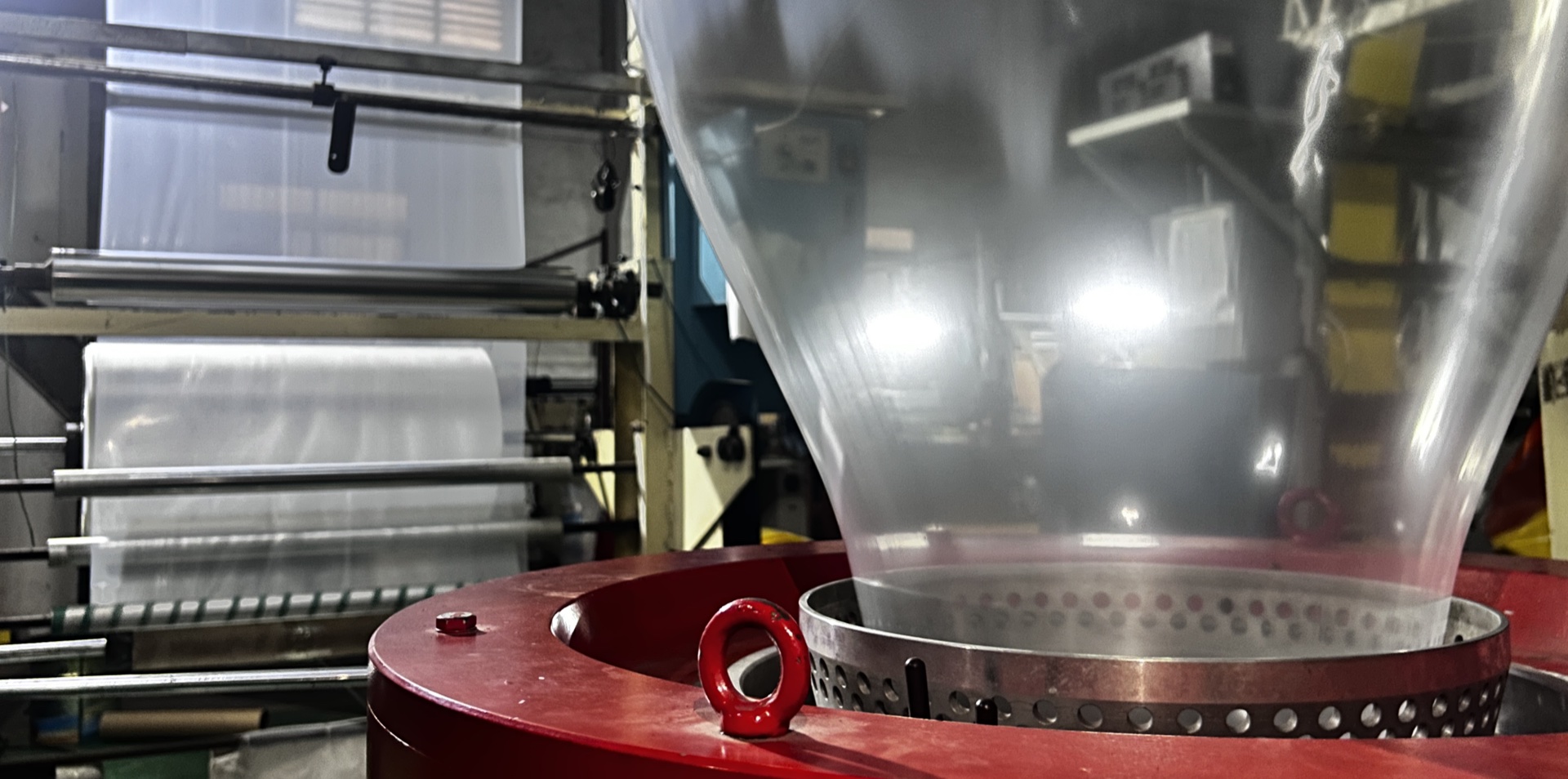
Materials and Film Formation
Flexible plastic bag production starts with thermoplastic resin pellets—most commonly low-density polyethylene (LDPE), linear low-density polyethylene (LLDPE), or high-density polyethylene (HDPE) polymerized from ethylene feedstock (see Polyethylene Packaging Materials). If an opaque tint or functional additive is specified, masterbatch pellets are metered into the base resin before melting.
In blown film extrusion, a heated screw extruder melts and homogenizes the pellets and pushes the melt upward through a circular die gap. Air inflates the molten ring into a continuous vertical film bubble while an external air ring cools and solidifies the web. Nip rollers at the top of the tower collapse the bubble flat into seamless Polyethylene Film tubing—or slit the edges into flat sheeting—before winding master rolls.
Printing Before Bag Conversion
When packaging requires logos, part numbers, barcodes, or handling notices, printing generally takes place on the continuous film web before individual bags are cut and sealed. Because untreated polyethylene has low surface energy, the film passes through an inline surface-treatment station so inks wet and anchor cleanly across repeat frames.
For automated form-fill-seal packaging lines, the printed web is shipped directly on cores as Printed Rollstock. Note that printing roll film and printing finished bags are separate specification questions: custom printing on pre-made converted bags depends on bag construction, artwork coverage, and order volume rather than applying automatically to every bag style. Review Poly Packaging Printing and Artwork Guide when preparing artwork files.
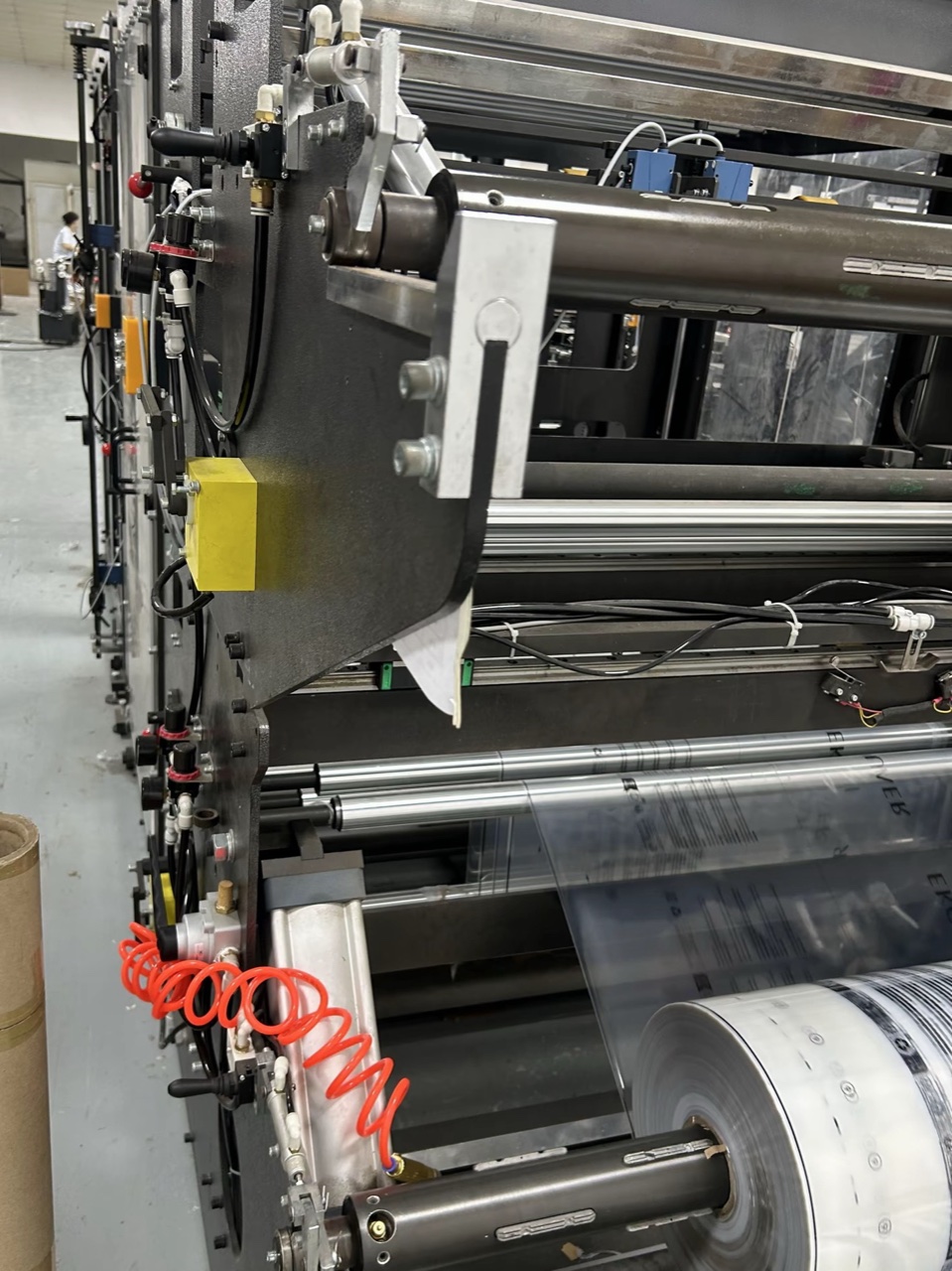
Cutting, Sealing and Bag Construction
Not all plastic bags are converted on the same sealing machinery. Once the extruded (and optionally printed) roll reaches the converting department, how the web is folded, slit, and welded determines the finished Poly Bags geometry and load behavior:
| Bag Construction | Film Feed Geometry | Cutting & Heat-Sealing Step |
|---|---|---|
| Bottom Seal Poly Bags | Seamless lay-flat or side-gusseted blown film tubing | A cross-seal bar welds horizontally near the base while a blade cuts each bag to length, leaving seamless folded sides. |
| Side Weld Poly Bags | Flat film folded in half lengthwise to form a continuous bottom crease | A heated side-weld knife cuts and seals the left and right edges simultaneously. |
| Closure & Punched Variants | Tubular or folded web paired with inline converting attachments | Applies extended lips, Lip and Tape strips, press-to-close zipper tracks, or Vented Poly Bags hole patterns. |
Specifications That Affect the Process
Every dimension and material detail on a buyer specification sheet maps directly to an extrusion, printing, or converting setup parameter—which is why manufacturers review complete specifications before quoting pricing or lead time:
- Resin family and blend: Dictates melt temperature, film stiffness, clarity, and heat-seal initiation range.
- Single-wall thickness (caliper): Controls extrusion draw-down ratio, cooling speed, bag weight per thousand pieces, and dwell time at the sealing bar (see Poly Bag Thickness, Gauge and Weight Guide).
- Width, gussets, and cut length: Determines die and bubble width during extrusion as well as folding boards and repeat stroke on the bag machine.
- Print repeat and closure features: Sets registration eye-mark spacing, unwind orientation, adhesive strip placement, or punch tooling layout.